
Warehouse security, designed around how warehouses lose money
Where we focus in a warehouse
Angles that capture seal numbers, loading sequence and tail-lift activity — the footage that actually settles a carrier dispute.
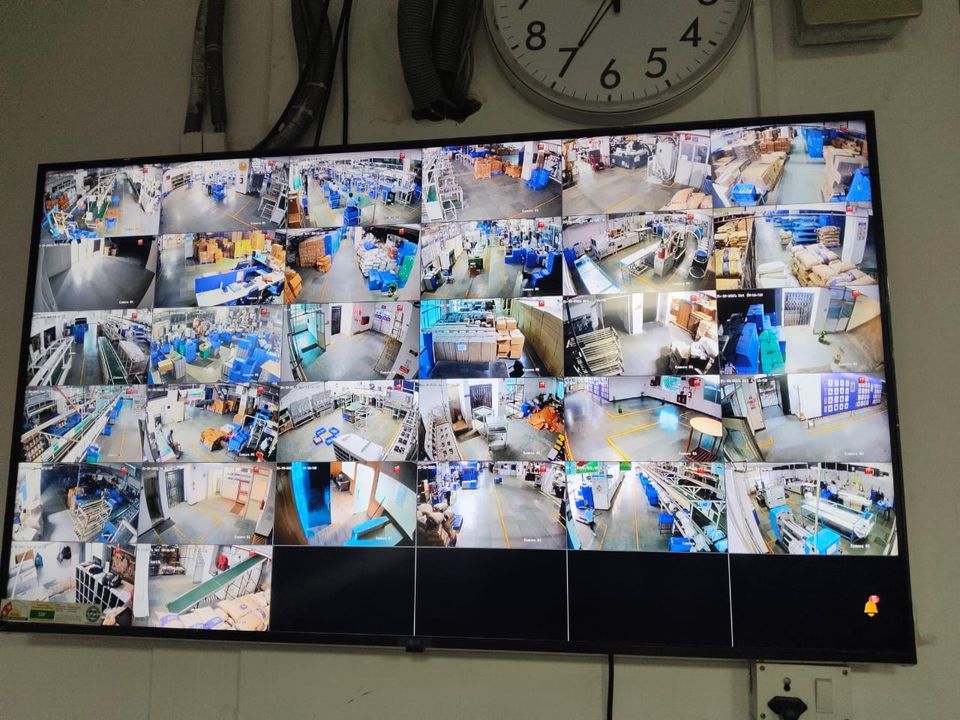
Coverage mapped against racking height and forklift routes. An aisle camera that only sees the top of a rack is decoration.
Long-range and low-light hardware where trenching cable isn't practical, we design wireless bridge links instead of leaving gaps.
The two areas where recorded footage most often ends up in an HR or insurance file. Retention here is planned, not accidental.
Rough coverage estimate
Enter an area to see an estimate.
Rough planning estimate only — actual coverage depends on layout, docks, and blind spots. A site assessment gives you the real number.
Shrinkage rarely walks out the front gate. It happens at docks during loading disputes, in aisles the layout drawing said were covered, and in yards after the second shift. Camera placement should follow the loss, not the floor plan. The same principle holds as new logistics markets scale up — Narnaul, where a planned multi-modal logistics hub is bringing warehouse-scale requirements to a district that hasn't needed them before, is a case in point.
Specified for the environment
Dust, vibration, 45-degree summers and the occasional forklift clip. We specify ingress protection (IP66 minimum outdoors) and impact resistance (IK-rated housings at dock level) per location — and put the reasoning in the design document, so procurement can see why each line item exists.
Compliance, handled
Every camera model is verified against its STQC certificate before order. Footage retention is configured to a written policy aligned with India's DPDP Act. If your clients audit your facility — and in 3PL, they do — the paperwork is ready before they ask. If you're not sure it would hold up, our security audit tells you before they do.
- IP66-rated
- IK-rated housings
- STQC-verified
- DPDP-aligned retention
Frequently asked questions
How many cameras does a warehouse need?
Coverage math decides it, not thumb rules. A 100,000 sq ft facility might need 40 cameras or 70 depending on racking, docks and yard size. The assessment answers this with a drawing, free.
Can you work without stopping operations?
Yes. Most warehouse installs run in scheduled windows around shifts. The method statement fixes this before work starts.
We already have cameras. Do we start over?
Usually not. The audit identifies what's reusable, what's non-compliant, and what's simply pointed the wrong way.