
Surveillance that survives the factory floor
What we cover in a manufacturing facility
Entry capture at gates (face and vehicle), fence-line coverage with low-light capability, and clear escalation zones for after-hours movement.
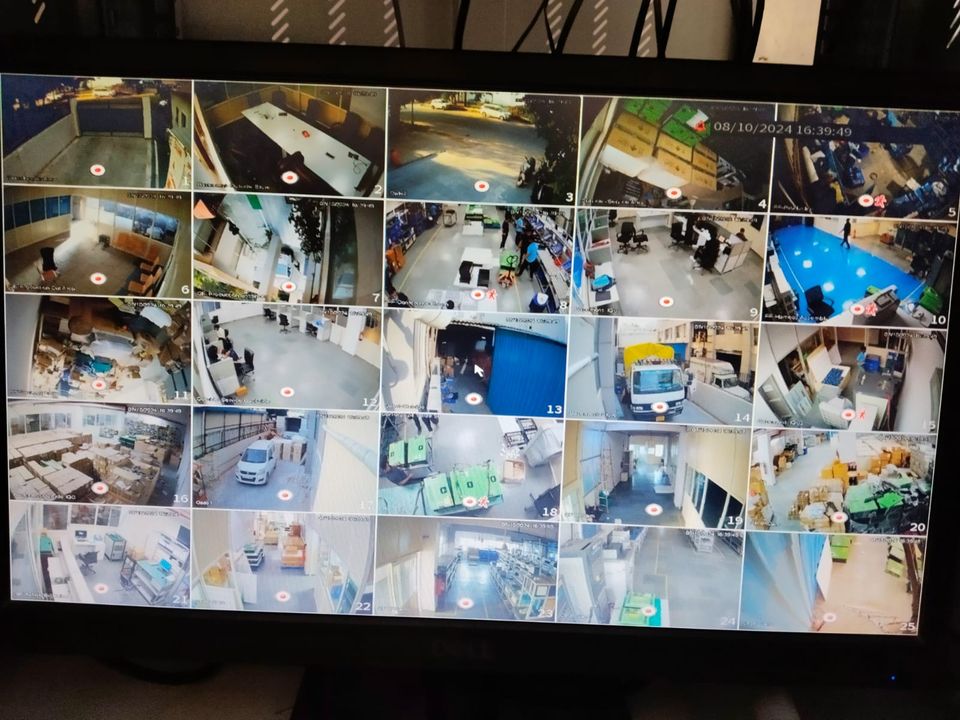
Wide coverage for incident review and dispute resolution — positioned to see the process, sited to survive it.
The two highest-shrinkage zones in most plants. Coverage plus retention policy here does more than a dozen lobby cameras.
Compressors, DG sets, electrical rooms — where a small incident becomes a big one. Cameras here support EHS, not just security.
Rough coverage estimate
Enter an area to see an estimate.
Rough planning estimate only — actual coverage depends on layout, docks, and blind spots. A site assessment gives you the real number.
Factories are hard on cameras. Dust kills sensors, heat kills electronics, and washdown areas kill anything without the right ingress rating. Half of industrial CCTV failures we see aren't design problems — they're specification problems. Someone put an office camera in a plant.
Specification discipline
In Manesar and Bhiwadi plants we specify IP66 as the outdoor minimum — lower-rated housings degrade within a couple of summers of dust and cleaning cycles. Washdown and high-heat zones get rated hardware or protective housings, stated per location in the BOQ. Camera traffic runs on its own VLAN, off your production network.
Supporting EHS, not just security
Well-placed cameras double as an EHS tool: incident investigation, near-miss review, PPE compliance checks at entry points. Where analytics genuinely help (they don't always), we'll say so — and where a painted line and a supervisor work better, we'll say that too.
Compliance, handled
STQC-verified hardware, written retention policy aligned to the DPDP Act, and a handover file your auditor — or your customer's auditor — can open without you in the room. Export-facing facility with European or US customers? Tell us during the assessment; supply-chain security requirements change the hardware shortlist. Already running a system you're unsure about? Our security audit finds out first.
- IP66-rated
- Dedicated VLAN
- STQC-verified
- DPDP-aligned retention
Frequently asked questions
Do you install during shutdowns?
Wherever possible, yes — planned shutdowns and maintenance windows are the cleanest install slots. Live-plant work follows a method statement agreed with your EHS team.
Our plant is dusty. How long will cameras actually last?
Correctly specified, 5–7 years is normal. The failures you've seen at 18 months are almost always under-specified housings.
Can cameras be kept off our IT network?
They should be. We run surveillance on a dedicated VLAN or physically separate switching — your IT head can review the design before installation.